
Are Dark Splashbacks a Good Idea for Small Kitchens?
The Common Concern
Conventional advice suggests using light colors to make small kitchens feel larger. While this principle remains valid, dark splashbacks are not automatically unsuitable for compact spaces. The outcome depends on balance, lighting, and material finish.
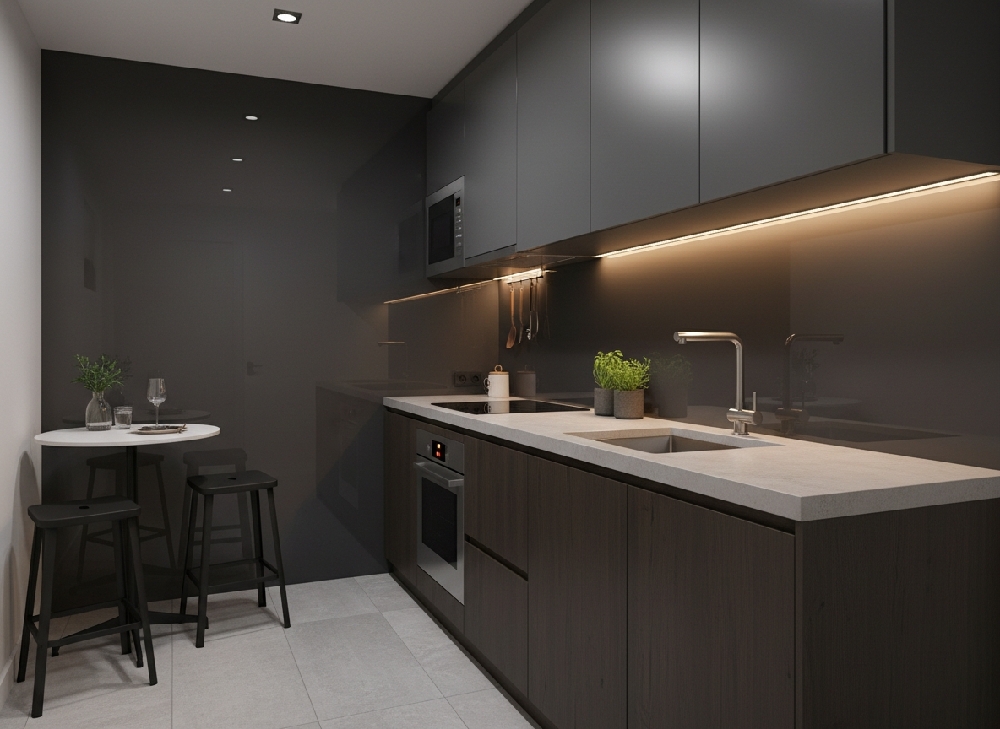
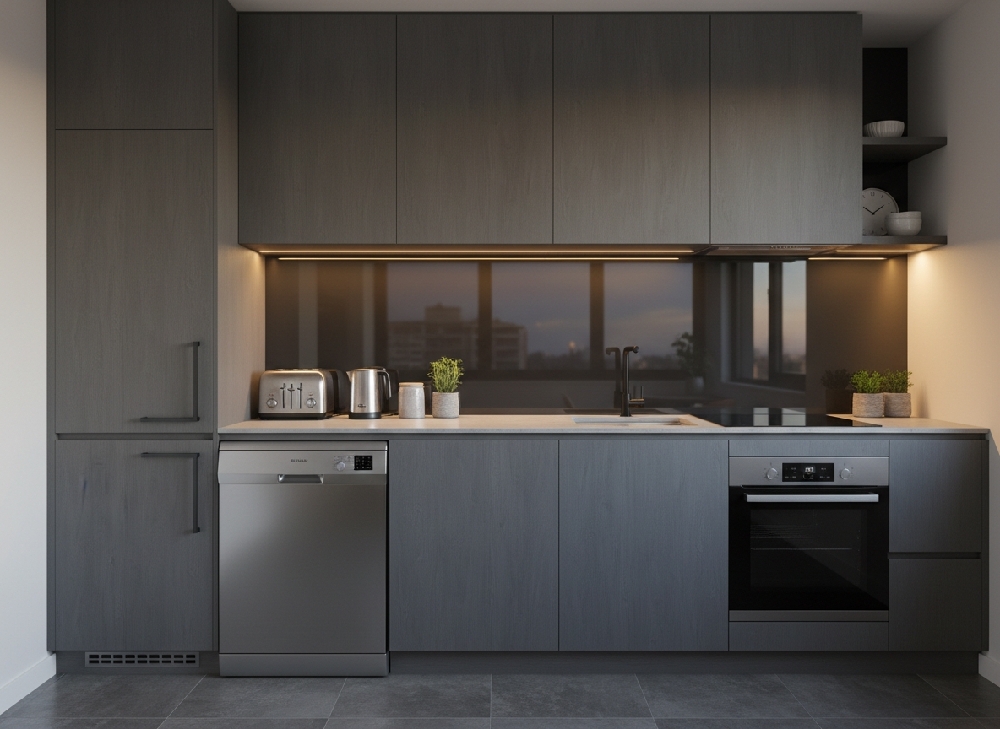
The Impact of Reflection
A dark gloss glass splashback can still reflect light effectively. The reflective surface prevents the color from visually “closing in” the space. In contrast, a dark matte finish absorbs more light and may make the kitchen feel more enclosed if not properly illuminated.
Lighting strategy is therefore critical. Under-cabinet LEDs or directional spotlights can prevent shadows and maintain depth.
Creating Controlled Contrast
Dark splashbacks work particularly well when paired with lighter cabinetry or worktops. This contrast adds structure and visual layering rather than heaviness. For example, white cabinets combined with a charcoal or deep navy splashback create a sharp, defined aesthetic.
Monotone dark-on-dark schemes require strong lighting and sufficient space to avoid visual compression.
Suppliers such as DIY Splashbacks offer custom color options that allow precise shade selection to balance boldness with practicality.
sza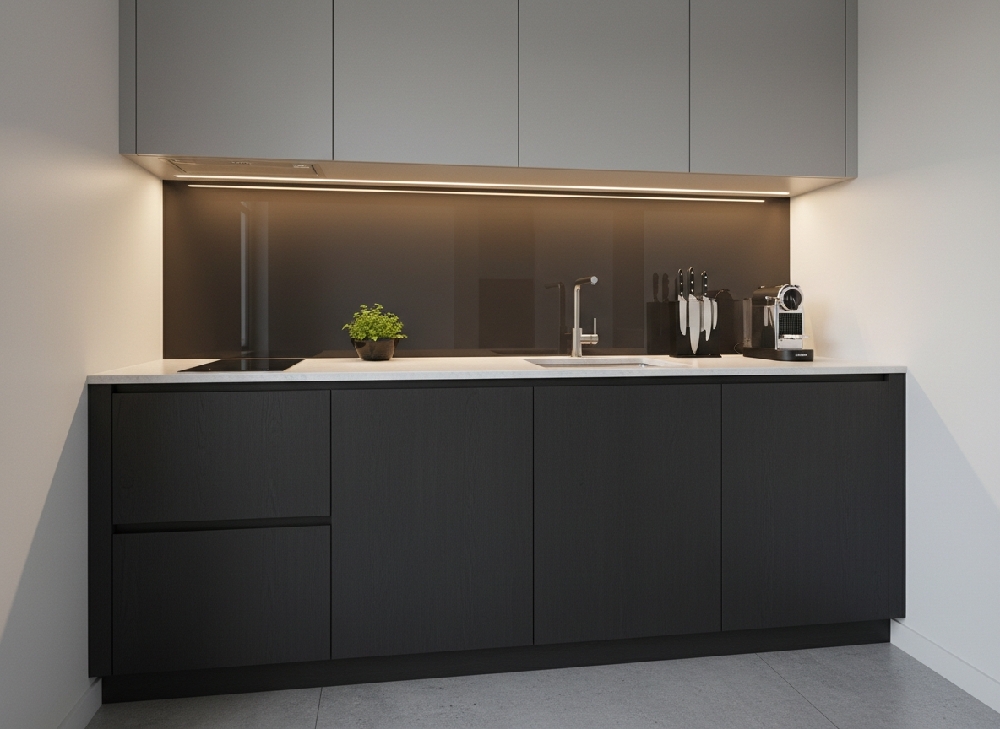
Maintenance Considerations
Dark finishes can show dust or water spots more visibly, particularly in matte textures. Gloss dark glass may display fingerprints under certain lighting angles. Regular cleaning mitigates this, but it should be considered in high-use kitchens.
Strategic Conclusion
Dark splashbacks can work effectively in small kitchens when paired with reflective finishes and adequate lighting. The key variable is balance. With controlled contrast and proper illumination, a darker splashback can deliver sophistication without reducing perceived space.