
Can a Splashback Improve Kitchen Lighting? A Strategic Design Perspective
Lighting defines a kitchen. It influences mood, usability, and perceived space. While most homeowners focus on ceiling fixtures and under-cabinet LEDs, one surface quietly determines how effective that lighting will be: the splashback.
The right splashback does more than protect walls. It actively enhances light performance and spatial perception.
Why Lighting Reflection Matters
Light interacts differently depending on surface finish.
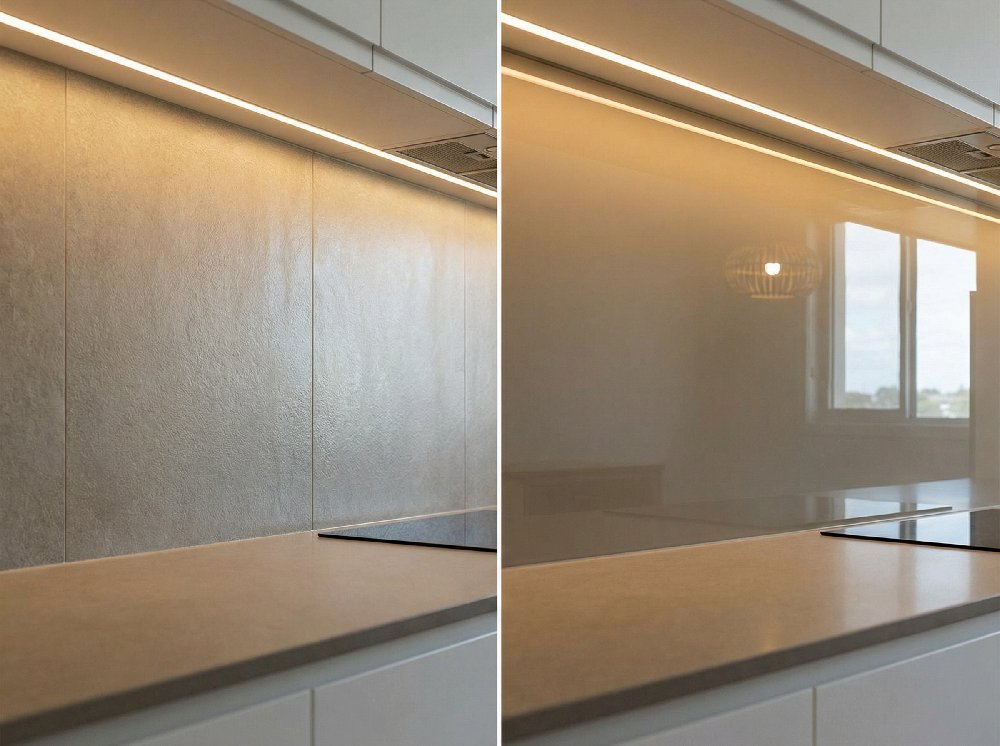
High-gloss surfaces reflect light back into the room.
Matte finishes absorb light.
Textured materials scatter light unevenly.
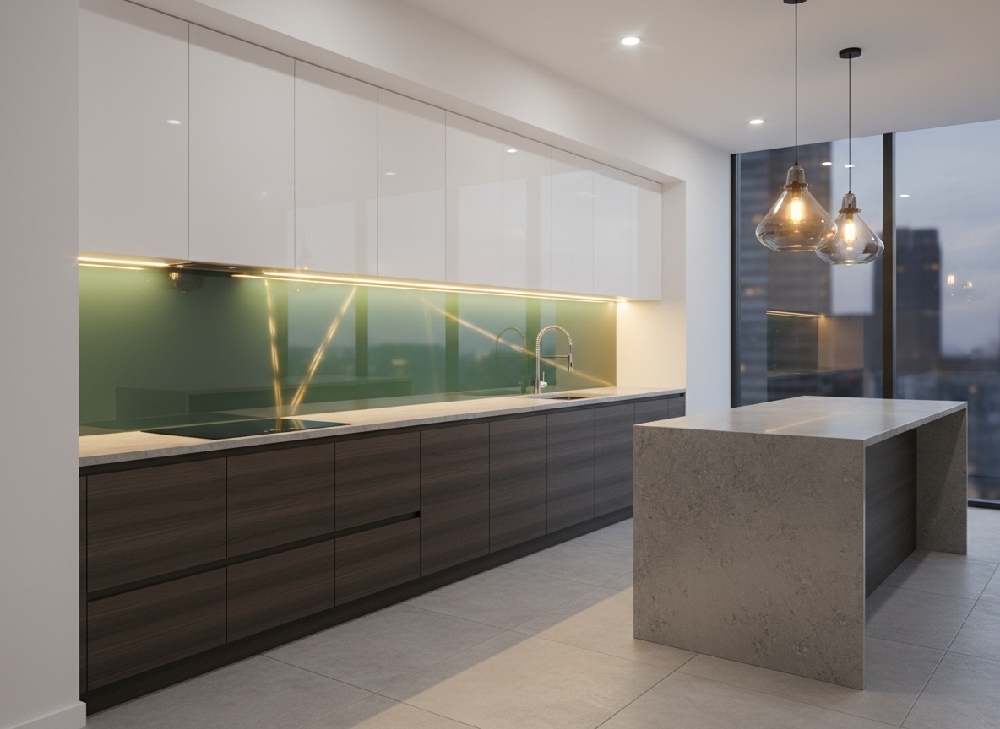
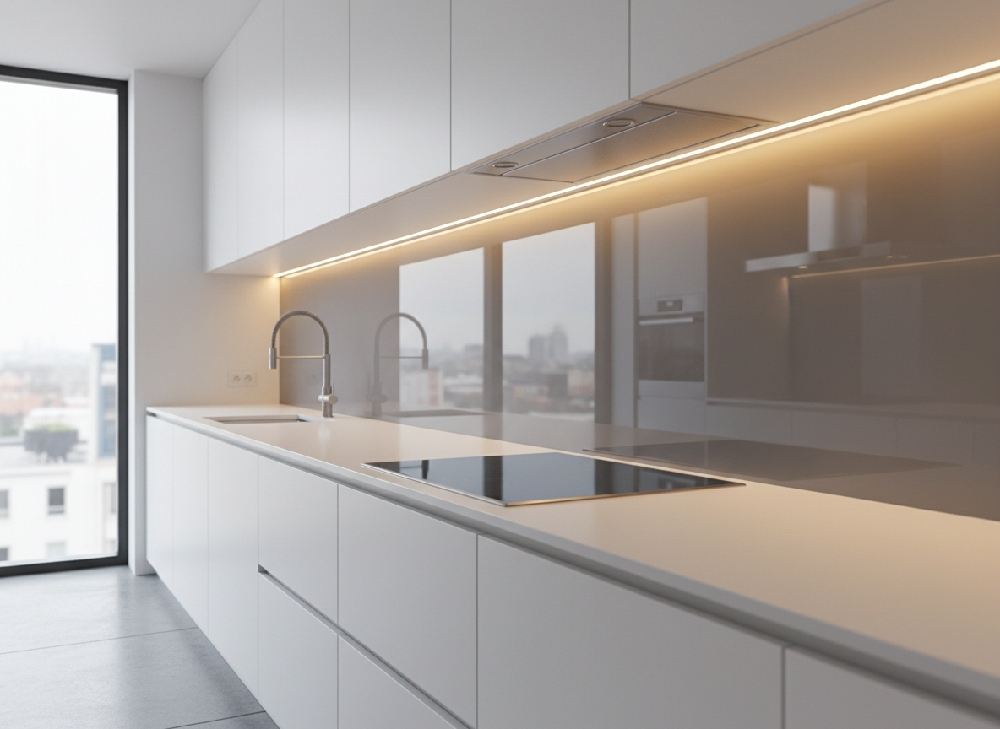
A reflective splashback—particularly toughened glass—acts as a secondary amplifier for both natural and artificial light. Instead of light stopping at the wall, it is redistributed across the workspace.
This is especially valuable in compact urban kitchens, where maximizing brightness without structural renovation is a priority.
The Impact in Smaller Kitchens
In tight layouts, visual expansion is essential. A reflective splashback creates depth by mirroring cabinetry, countertops, and light sources.
The result:
The kitchen appears wider
Dark corners are softened
Artificial lighting feels stronger without increasing wattage
This approach aligns with both traditional design principles—maximize what you already have—and modern performance-driven aesthetics.
Dark Cabinetry and Light Balance
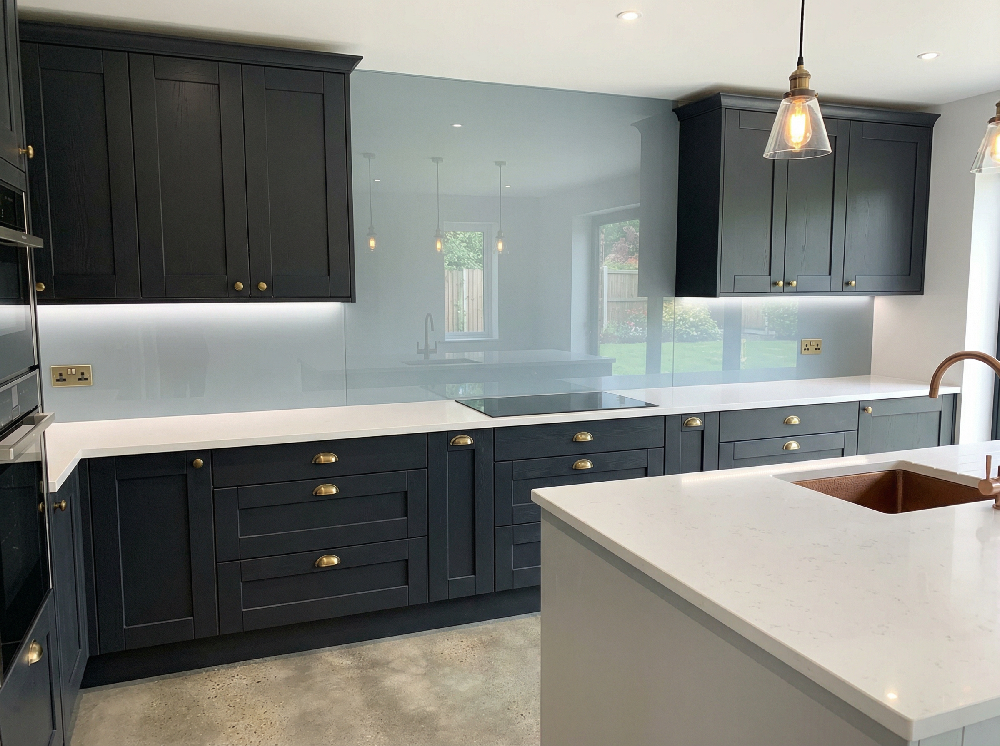
Deep cabinet colors such as navy, charcoal, forest green, or black can elevate a kitchen. However, they absorb light.
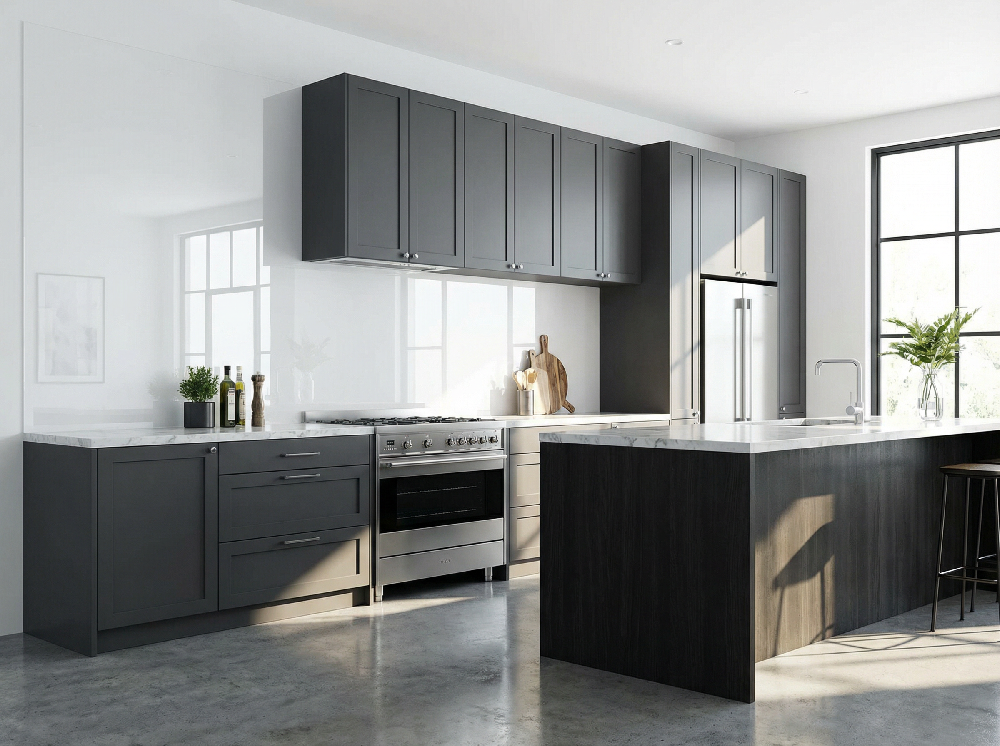
Pairing darker cabinetry with a gloss splashback restores balance. The reflective surface prevents the room from feeling compressed or heavy.
Strategically, this means you can maintain bold design choices without compromising brightness.
Homes With Limited Natural Light
In properties where window expansion is not feasible, surface reflectivity becomes critical. A gloss glass splashback can redistribute available daylight across the room.
Instead of investing immediately in additional fixtures, homeowners can leverage material selection to improve illumination efficiency.
This is a cost-effective performance upgrade rather than a structural overhaul.
Material Comparison: Light Performance
| Material | Light Reflection Level | Design Outcome |
|---|---|---|
| Toughened Glass | High | Brightens and enlarges space |
| Acrylic | Moderate | Some reflection, less depth |
| Matte Tiles | Low | Absorbs light |
Glass remains the most effective option when brightness and visual expansion are the objectives.
Energy and Efficiency Considerations
A well-positioned reflective splashback can:
Enhance under-cabinet LED performance
Reduce daytime reliance on artificial lighting
Improve task lighting distribution
Strengthen the overall visual standard of the kitchen
While it does not replace proper lighting design, it increases the return on existing lighting investments.
Final Insight
A splashback should not be viewed solely as a protective barrier. It is a functional design asset that influences how light behaves within the kitchen environment.
When specified with intent, it improves brightness, expands perceived space, and strengthens overall kitchen presentation—without altering the structure of the room.