DIY Entryway Command Hub: Elevating Everyday Readiness with a Timeless Touch
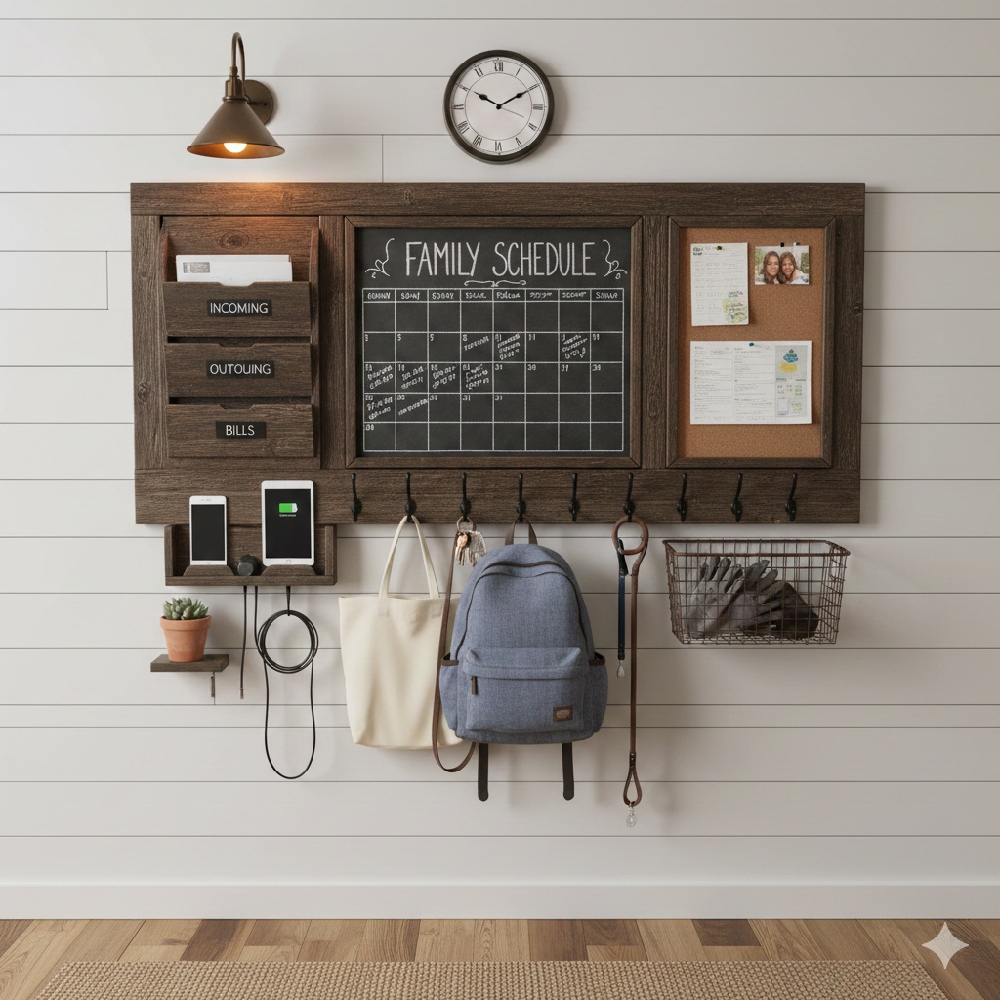
In a world where households are accelerating toward streamlined living, one simple, time-honored build continues to deliver operational excellence: the wall-mounted entryway command hub. This is a pragmatic DIY that respects the fundamentals—clean workflow, durable materials, and intuitive design—while still positioning your home for forward-leaning efficiency. It’s a transformation that doesn’t shout; it performs.
At its core, this project consolidates incoming and outgoing essentials into a single, high-visibility touchpoint. Whether you manage a busy home or just want to eliminate daily bottlenecks, this setup preserves the classic principles of orderliness while leaning into a more agile way of living.
What You’ll Need
• Slim wooden board
• Mini hooks
• Small wire basket
• Adhesive strips or screws
• Compact whiteboard or chalk panel
• Measuring tape
Deployment Blueprint
1. Identify the Strategic Zone
Pinpoint your primary entry path. Legacy interior planning teaches us that the most effective home systems live where traffic naturally flows. This ensures the hub becomes a seamless part of the daily journey rather than an afterthought.
2. Mount the Board
Install your wooden board with screws or high-strength adhesive. Precision here drives long-term stability and reinforces the classic craftsmanship mindset—measure twice, place once.
3. Position the Hooks
Add hooks along the lower area of the board. These act as your rapid-access nodes for keys, lanyards, or small accessories. No clutter. No lag.
4. Integrate the Basket
Affix the wire basket to manage incoming mail, receipts, or items that need immediate attention. This creates a centralized information channel, minimizing scatter and boosting daily clarity.
5. Add the Memo Panel
Place the whiteboard or chalk panel above the basket. This transforms the hub into a live communication dashboard—perfect for reminders, quick to-dos, or shared notes.
6. Conduct a Workflow Check
Load in your essentials, run a full day’s cycle, and validate ergonomics. You’re not just building something decorative—you’re operationalizing your space.
Why This DIY Works
This build reinforces a structured living rhythm. It reduces friction, eliminates the daily “where are my keys?” loop, and promotes a cleaner, more disciplined household workflow. It’s a small project with a legacy mindset that generates modern results.
For more home-focused upgrades—and to explore materials that elevate both form and function—visit DIY Splashbacks, where design-forward solutions and timeless practicality converge.
Conclusion
Deploying an entryway command hub is more than a weekend project—it’s a strategic reset for your home’s daily rhythm. By centralizing essentials and tightening your workflow, you’re investing in a cleaner, faster, more dependable routine. It’s a future-aligned upgrade grounded in traditional best practices, proving once again that streamlined living starts with smart, intentional systems.
And if you’re exploring more ways to enhance your space with practical, design-forward solutions, DIY Splashbacks continues to offer resources, insights, and materials that elevate both performance and aesthetics.