DIY Under-Stair Storage Optimization: Turning Dead Space into Strategic Value
Every well-designed home respects efficiency. Under the stairs is one of those overlooked zones that has existed forever, yet is rarely leveraged properly. This DIY project is about disciplined space management—extracting value from what’s already there, without disrupting the character of the home.
Why This Works (Tradition Meets Logic)
Historically, homes relied on cupboards, trunks, and built-ins to manage clutter. The under-stair area served that role when space was scarce. This DIY revives that mindset, using modern materials and cleaner execution to meet today’s storage demands while respecting proven layouts.
The DIY Approach
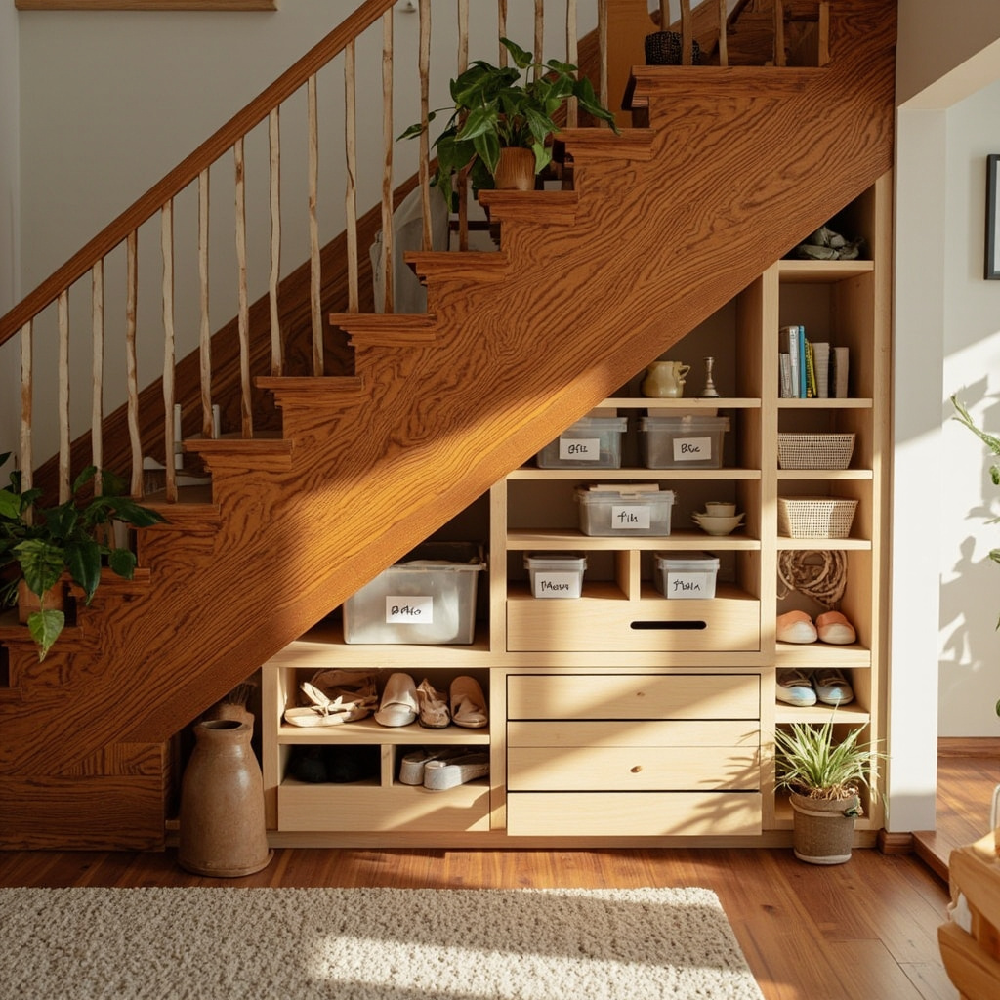
The concept is simple: modular pull-out drawers or open shelving built to fit the stair angle. Measure once, cut clean, and assemble with durability in mind. Plywood or MDF remains a trusted material choice—cost-effective, easy to work with, and structurally sound when finished correctly.
Key components:
• Framed compartments aligned with the stair slope
• Drawer runners or fixed shelving depending on usage
• Neutral paint or wood finish to keep the look timeless
Execution and Payoff
This is a low-risk, high-return DIY. You reduce visible clutter, increase functional storage, and enhance the perceived order of your home. From a value standpoint, it’s a quiet upgrade that buyers and guests notice immediately—even if they can’t quite pinpoint why the space feels more efficient.
Design Discipline
Avoid over-styling. Clean lines, practical access, and durable finishes win every time. This isn’t about novelty—it’s about control, structure, and longevity. When done right, the storage looks like it was always meant to be there.
Closing Perspective
Under-stair storage optimization is a textbook example of smart DIY thinking. It respects traditional space usage, applies modern execution, and delivers measurable everyday benefits. No gimmicks. Just a solid improvement that aligns form, function, and foresight.
Bottom line: Maximize what you already own. That’s how good homes—and good DIY decisions—are built.