Are There Splashbacks That Double as a Backsplash in a Bathroom?
Interior design continues to prioritize materials that combine durability with visual appeal. Splashbacks, traditionally associated with kitchens, are increasingly being used in bathrooms as well. This raises a practical question often asked by homeowners and renovators: Can a splashback also function as a bathroom backsplash?
The answer is yes. In many cases, the same materials used for kitchen splashbacks are perfectly suited for bathroom environments, offering protection from water damage while enhancing the overall design.
Understanding Splashbacks and Bathroom Backsplashes
A splashback is a protective panel installed behind sinks, cooktops, or work areas to shield walls from splashes, stains, and moisture. In bathrooms, a backsplash serves essentially the same purpose—protecting the wall behind sinks or vanity units from water exposure.
Because the functionality overlaps, a splashback can easily double as a bathroom backsplash when the correct materials are used.
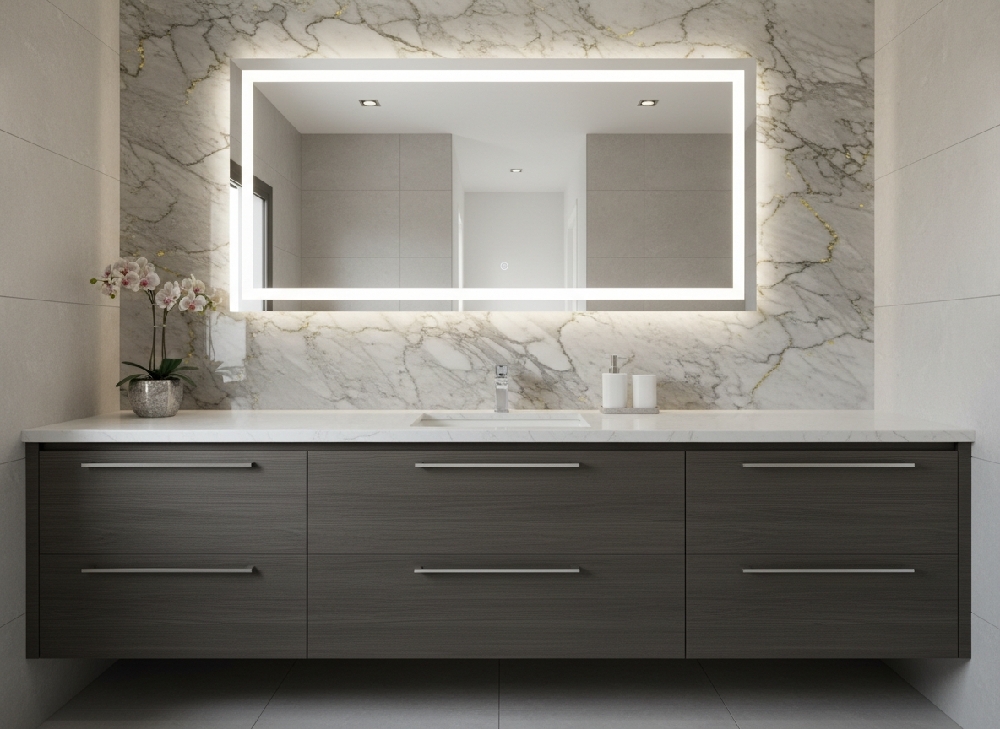
Why Splashbacks Work Well in Bathrooms
Bathrooms are high-moisture spaces, and walls around sinks are frequently exposed to water, soap, and personal care products. Splashbacks provide a strategic barrier that prevents long-term damage.
Moisture Protection
A properly installed splashback prevents water from seeping into the wall surface. This reduces the risk of mold, peeling paint, or structural deterioration.
Easy Cleaning
Most splashback materials are non-porous, meaning toothpaste marks, soap residue, and water spots can be wiped away with minimal effort.
Modern Appearance
Large splashback panels create a seamless surface with fewer joints compared to traditional tiles.
Materials That Work Best for Bathroom Splashbacks
Selecting the right material is critical to ensure longevity and performance in a bathroom setting.
Toughened Glass Splashbacks
Glass splashbacks are one of the most popular options due to their sleek finish and durability. Toughened glass is resistant to moisture, heat, and staining.
Advantages
Fully waterproof
Smooth, seamless finish
Wide range of color options
Companies such as DIY Splashbacks offer custom glass panels designed to fit specific wall dimensions and cut-outs.
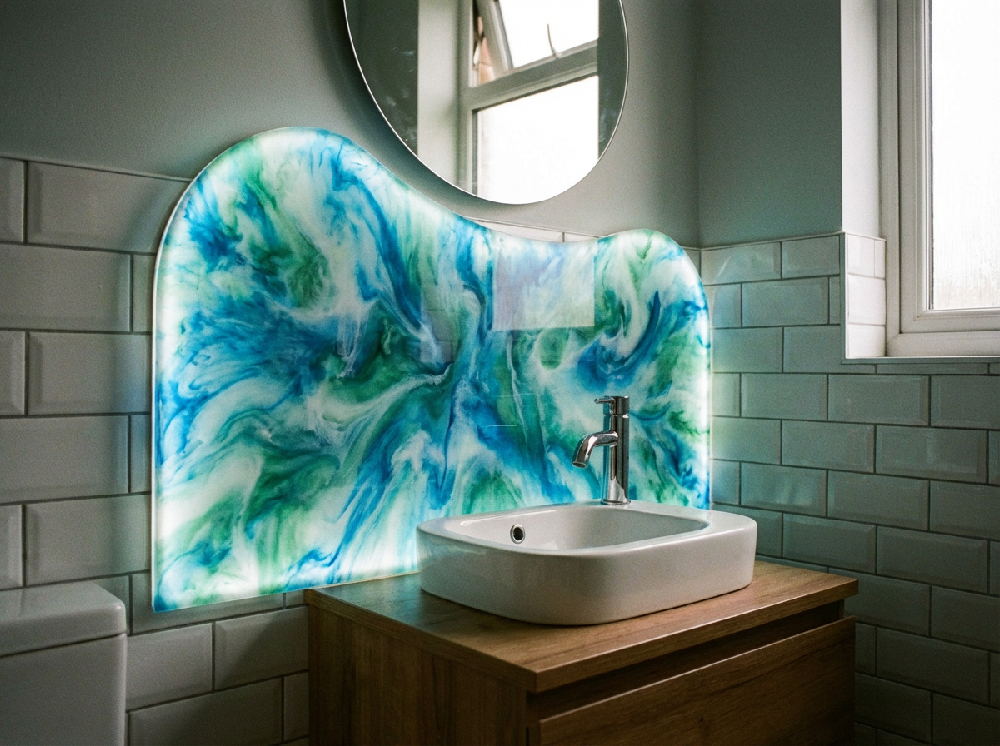
Acrylic Splashbacks
Acrylic panels provide a lightweight alternative to glass and are commonly used in bathrooms where cost efficiency and quick installation are priorities.
Advantages
Budget-friendly
Easy to install
Available in multiple colors
However, acrylic surfaces can scratch more easily than glass, so gentle cleaning methods are recommended.
Stainless Steel Splashbacks
For a bold or industrial-style bathroom, stainless steel panels offer strong durability and moisture resistance.
Advantages
Highly durable
Resistant to corrosion
Easy to sanitize
While more common in kitchens, stainless steel can create a distinctive bathroom design when paired with modern fixtures..
Best Places to Install Splashbacks in a Bathroom
Splashbacks are versatile and can be used in several areas within a bathroom.
Behind Vanity Units
This is the most common location. A splashback protects the wall from daily splashing during handwashing and grooming.
Around Basin Areas
Extending the splashback across the full width of the vanity can create a more cohesive design.
Behind Freestanding Sinks
Even standalone basins benefit from wall protection to prevent moisture damage.
Splashbacks vs Traditional Tile Backsplashes
Tiles have long been the standard for bathroom backsplashes. However, splashbacks provide several advantages.
Key differences include:
Fewer grout lines, which reduces mold buildup
Faster installation in many cases
A smoother, more contemporary appearance
Easier long-term maintenance
For homeowners aiming for a clean, modern aesthetic, splashbacks can offer a more streamlined solution.
Custom Solutions for Bathroom Spaces
Many homeowners now choose custom-cut splashbacks to ensure precise fitting around electrical outlets, mirrors, or lighting fixtures. Suppliers such as DIY Splashbacks allow customers to order panels tailored to specific dimensions, helping achieve a professional finish.Final Thoughts
Splashbacks are no longer limited to kitchens. With durable materials like glass, acrylic, and stainless steel, they perform effectively as bathroom backsplashes, offering protection against moisture while elevating the visual appeal of the space.
For homeowners planning bathroom upgrades, installing a splashback behind the vanity or basin is a practical way to combine functionality with modern design.