
Can I Use Wallpaper or Paint as a Kitchen Splashback?
Short answer: yes—but only within controlled, low-risk zones. If you treat wallpaper or paint as a full replacement for traditional splashbacks behind hobs or sinks, failure is predictable. The viable strategy is selective deployment with protective layering.
Where Wallpaper or Paint Can Work
Wallpaper and paint perform adequately in low-moisture, low-heat areas.
Suitable zones:
Behind countertops with no sink or hob
Decorative feature walls
Above shelving or storage units
These areas experience minimal steam, grease, and direct splashes.
/openart-image_1774027358573_25ec8a64_1774027358614_355900a4 (1).png)
Where They Will Fail
High-impact zones demand industrial-level durability.
Avoid using wallpaper or paint:
Behind cooktops (heat + grease exposure)
Behind sinks (constant water contact)
Near kettles or steam-generating appliances
Failure patterns:
Peeling and bubbling
Staining and discoloration
Mould formation
How to Make Paint Work as a Splashback
Paint can operate as a cost-efficient, short- to mid-term solution if properly specified.
Execution framework:
Use high-quality washable or scrubbable paint
Opt for satin or gloss finishes (better moisture resistance)
Apply a protective clear sealant or topcoat
This increases resistance to stains and simplifies maintenance
/openart-image_1774027680424_6106b2e1_1774027680770_33f2203c (1).png)
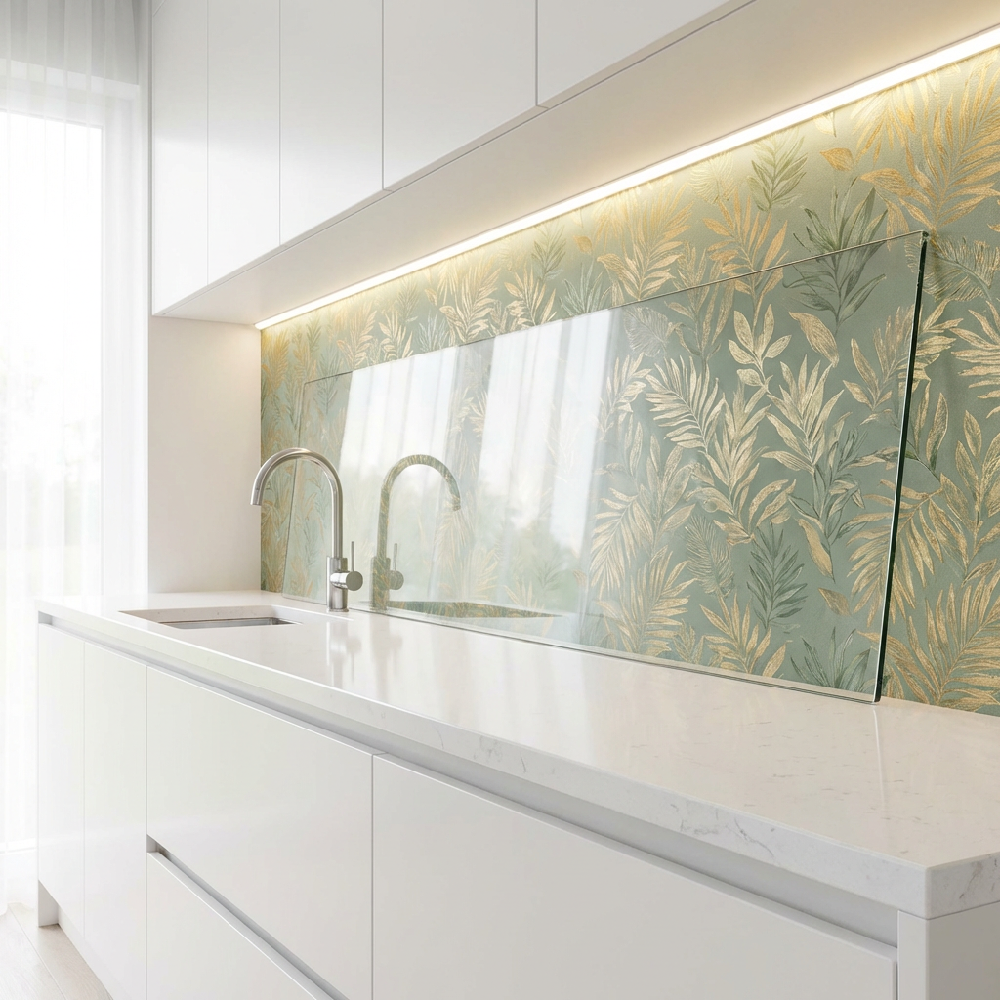
How to Make Wallpaper Viable
Wallpaper alone is not a splashback solution—it’s a design layer.
Best practice:
Use vinyl or washable wallpaper
Install a clear glass or acrylic panel over it
Ensure edges are properly sealed
This hybrid model delivers visual impact with functional protection.
/openart-image_1774027724405_51e15221_1774027725645_07d5f677 (1).png)
Maintenance Reality Check
Paint and wallpaper require higher operational discipline than traditional materials.
Ongoing requirements:
Frequent wiping to prevent buildup
Immediate cleaning of grease or water splashes
Periodic touch-ups (for paint)
Unlike glass or acrylic, these are not “install and forget” solutions.
Strategic Comparison: Traditional vs Alternative
| Feature | Paint/Wallpaper | Glass/Acrylic Splashback |
|---|---|---|
| Cost | Lower upfront | Higher upfront |
| Durability | Moderate to low | High |
| Maintenance | High | Low |
| Heat Resistance | Low | High |
| Water Resistance | Moderate (with treatment) | Excellent |
Final Positioning
Using wallpaper or paint as a kitchen splashback is not a replacement strategy—it’s a selective design decision.
Best-case scenario:
Decorative zones
Layered with protective materials
Supported by consistent maintenance
If performance, hygiene, and longevity are priorities, traditional solutions like glass or acrylic splashbacks remain the industry benchmark.