
DIY Fabric Softener Spray: A Practical Home Upgrade Rooted in Tradition
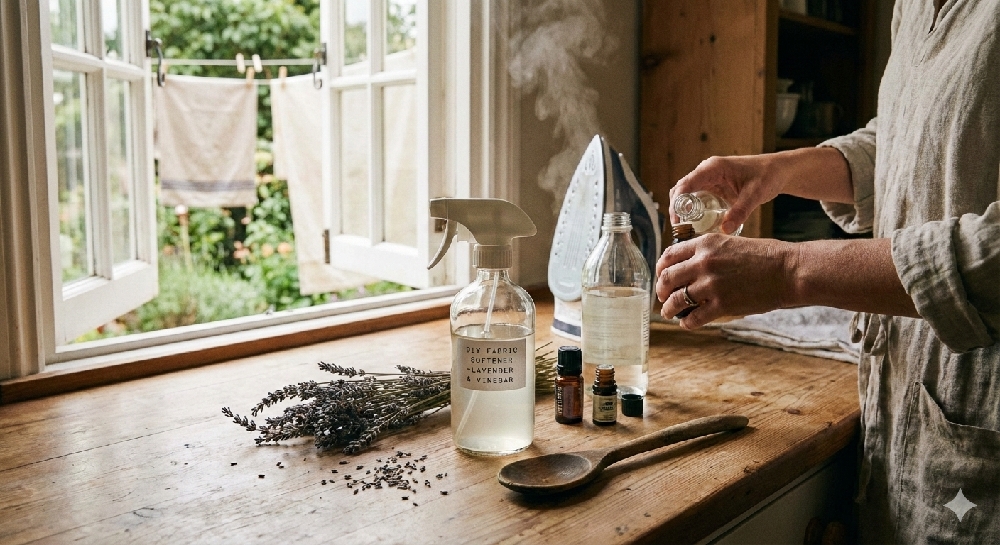
Long before store-bought fabric sprays became a household default, people relied on simple, effective formulas made from what they already had. Those methods weren’t trends—they were systems built on consistency, cost control, and results. This DIY fabric softener spray revisits that legacy and refines it for modern living.
This is not about reinventing home care. It’s about optimizing it.
Why This DIY Still Makes Sense Today
Modern households are overloaded with single-purpose products. Each one promises convenience but quietly increases cost, clutter, and chemical exposure. This DIY counters that model with a consolidated solution that delivers real utility across multiple surfaces.
The formula works because it addresses three fundamentals:
• Odor neutralization, not masking
• Fabric softening without residue
• Surface refresh with minimal effort
That’s operational efficiency at a household level.
Core Ingredients and Their Function
• White Vinegar: Breaks down odor-causing bacteria and softens fibers naturally. This has been a staple in fabric care for generations.
• Baking Soda: Absorbs lingering smells and stabilizes the solution.
• Warm Water: Ensures proper dissolution and even distribution.
• Essential Oils (Optional): Adds controlled scent without overpowering the space.
Each component earns its place—no fillers, no redundancy.
Step-by-Step Execution
1. Pour one cup of warm water into a clean spray bottle.
2. Add one tablespoon of baking soda. Shake gently until fully dissolved.
3. Slowly introduce one tablespoon of white vinegar. Expect light fizzing—this is normal.
4. Add 5–10 drops of essential oil if desired.
5. Cap the bottle and shake lightly before each use.
This process is repeatable, scalable, and easy to standardize.
Where This DIY Delivers the Most Value
This spray performs best on soft surfaces that trap odors over time:
•Upholstered furniture
• Curtains and drapes
• Bedding and mattresses
• Clothing between washes
• Car interiors
Used consistently, it extends the life of fabrics and reduces the need for frequent deep cleaning.
Best Practices for Results
• Always mist lightly—saturation is unnecessary.
• Test on a small, hidden area first, especially on delicate fabrics.
• Store in a cool place and remake monthly for peak effectiveness.
These controls ensure predictable outcomes and avoid unnecessary rework.
The Bigger Picture: Fix, Refresh, Maintain
This DIY supports a broader philosophy: maintain what you own instead of constantly replacing it. That mindset has guided households for decades, and it’s becoming relevant again as people seek smarter, more intentional living.
In a world of disposable solutions, this approach prioritizes durability and responsibility without sacrificing performance.
Conclusion
This fabric softener spray is proof that traditional methods still hold strategic value when applied correctly. It’s cost-effective, reliable, and easy to integrate into daily routines. Not flashy, not complicated—just effective.
Sometimes the smartest upgrade isn’t new. It’s refined.