
Is a Splashback Required by Building Regulations?
When planning a kitchen installation or upgrade, compliance is non-negotiable. A common question from homeowners and property developers is clear: Is a splashback legally required under building regulations?
The Straight Answer
In most residential kitchens, a splashback is not explicitly required by law.
There is no regulation that states a splashback must be installed behind every hob or sink. However, building regulations do require that materials near cooking appliances meet safety and fire-resistance standards.
Minimum compliance does not eliminate practical necessity.
Where Regulations Actually Apply
While splashbacks themselves are not mandated, the surrounding safety framework matters.
In England and Wales, guidance is typically linked to:
Building Regulations 2010
Approved Document J
These regulations focus on:
Fire safety
Heat resistance
Safe clearances around combustion appliances
Prevention of combustible material exposure
In practical terms, any wall surface behind a gas hob must be capable of handling heat safely. That is where toughened glass, stainless steel, tile, or stone surfaces become strategically important.
Gas vs. Electric Hobs: Why It Matters
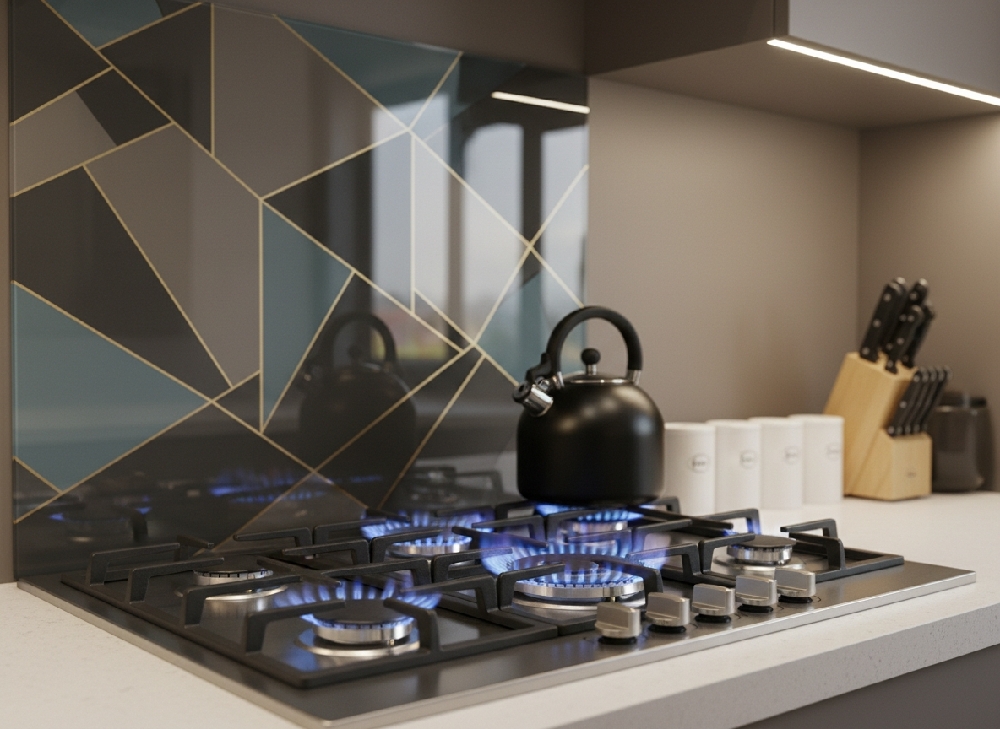
Gas hobs introduce open flames. That increases the importance of non-combustible, heat-resistant materials behind the cooking zone.
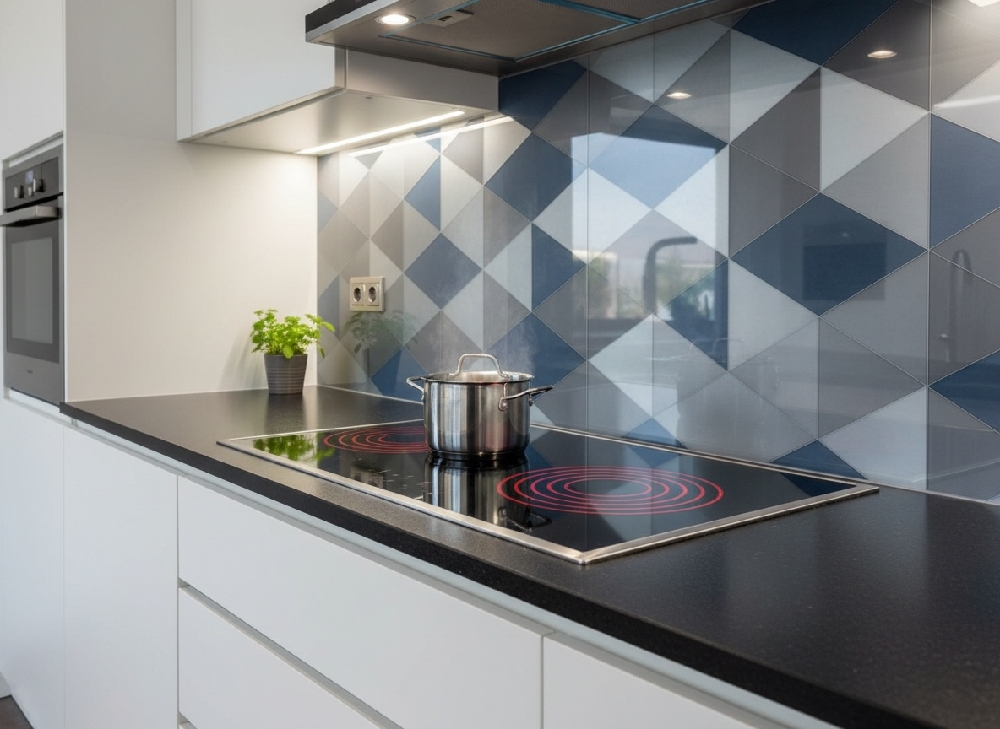
Electric and induction hobs generate less direct flame exposure but still produce heat, steam, and grease splatter.
From a regulatory risk perspective:
Gas = higher fire consideration
Electric = lower flame risk but still requires durable surface protection
Hygiene and Moisture Control
Although domestic kitchens are not regulated like commercial food environments, moisture resistance remains critical.
Painted plaster behind sinks and cooktops deteriorates over time. Steam penetration leads to peeling, staining, and mold growth.
A wipeable, sealed surface—such as glass or tile—mitigates that long-term risk.
What Happens If You Skip a Splashback?
Legally, you may remain compliant if the wall material is heat-resistant and safe. Practically, you expose the space to:
Grease absorption
Heat damage
Increased repainting cycles
Reduced visual appeal
Lower resale confidence
Building regulations define minimum safety. They do not guarantee durability or aesthetics.
Compliance vs. Best Practice
A splashback is not typically a statutory requirement in residential settings. However, heat-resistant surfaces behind cooking appliances effectively become a functional necessity under fire-safety guidance.
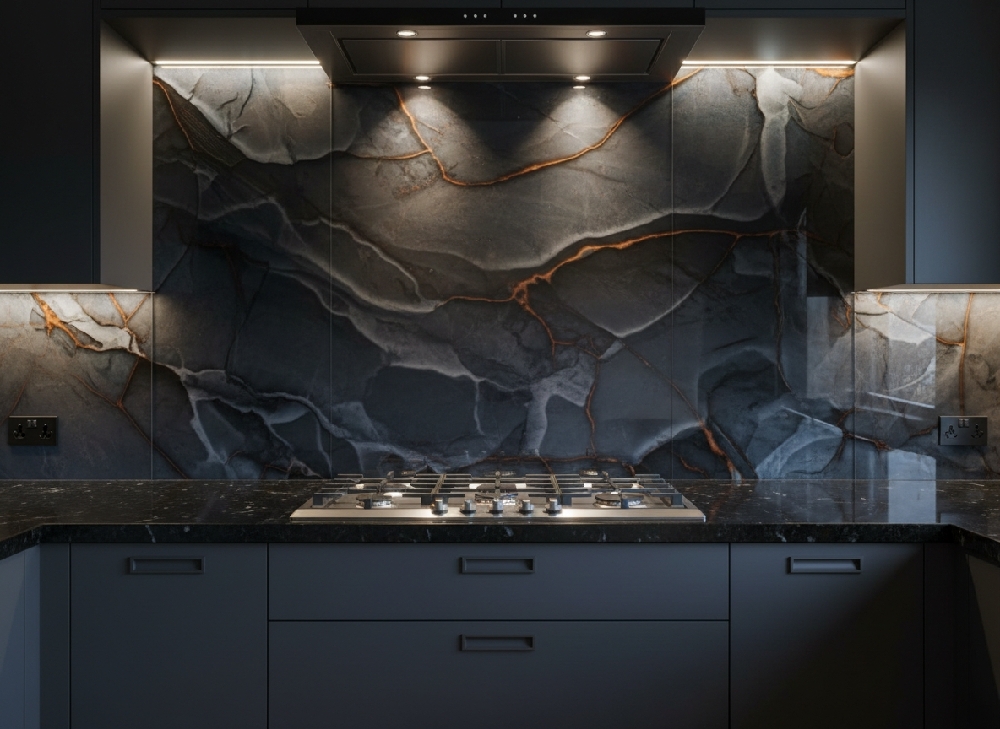
Traditionally, tiles fulfilled this role. In modern kitchens, seamless toughened glass provides:
Greater ease of cleaning
Fewer maintenance points
Stronger contemporary appeal
Long-term cost efficiency
Final Position
A splashback is not specifically mandated by building regulations in most homes. However, the materials used behind cooking appliances must meet fire-safety expectations.
In operational terms, installing a compliant splashback is not about meeting the minimum. It is about exceeding it.
Regulations establish the baseline. Intelligent design secures longevity.