
Power Without Clutter: Modernizing Traditional Storage the Smart Way
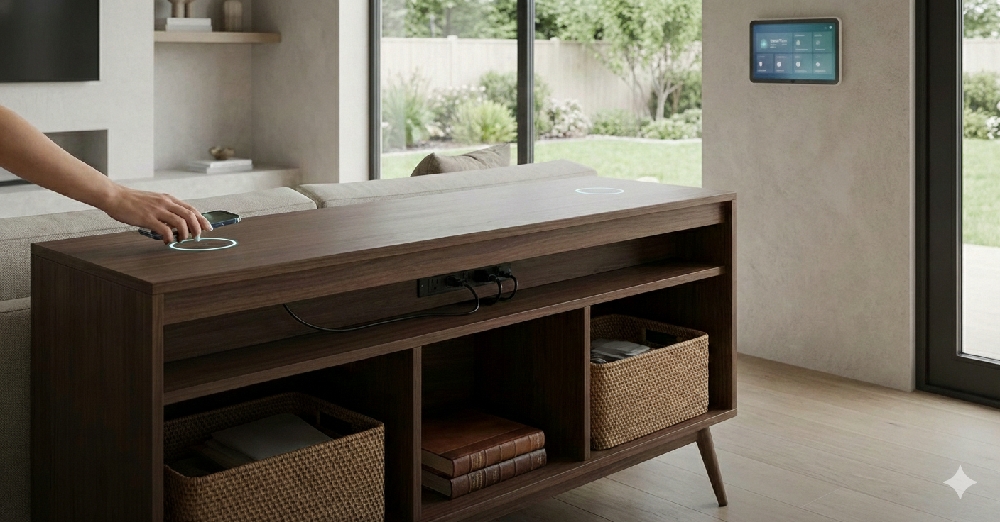
This project is about disciplined optimization—taking something that has worked for decades and repositioning it for today’s realities without unnecessary reinvention.
The Strategic Concept
Homes were never designed for a device-heavy lifestyle. Drawers, sideboards, and console tables were built to hide clutter and create visual calm. The modern challenge isn’t storage—it’s power distribution. This DIY bridges that gap by transforming an existing piece of furniture into a centralized, concealed charging hub that respects traditional layout logic while enabling modern use.
Why This DIY Delivers Long-Term Value
• Continuity over disruption: No redesign, no demolition, no trend-driven purchases.
• Operational efficiency: One charging location eliminates daily friction.
• Aesthetic control: Cables disappear, surfaces stay clean, and order is restored.
• Asset longevity: Existing furniture gains a new role instead of being replaced.
This is a textbook example of incremental improvement with compounding benefits.
Materials (Lean and Purpose-Driven)
• Existing drawer, cabinet, or sideboard
• Power strip with surge protection
• Drill with wood bit (measured, not aggressive)
• Cable grommet or rubber edging
• Drawer dividers or a custom wooden tray
• Felt or cork lining
• Optional: USB hub for future scalability
Step-by-Step Execution Framework
1. Location Assessment
Choose a drawer within practical reach of a wall outlet. Kitchens, entryways, and home offices deliver the highest ROI.
2. Precision Access Point
Drill a single hole at the back or underside of the drawer. This is a controlled modification—clean edges signal intent, not improvisation.
3. Power Infrastructure Setup
Secure the power strip inside the drawer using adhesive strips or screws. Prioritize surge protection to mitigate long-term device risk.
4. Internal Organization
Install dividers to assign each device a dedicated zone. This prevents cable tangling and reinforces daily discipline.
5. Surface Protection
Line the drawer base with felt or cork. This reduces friction, protects finishes, and subtly upgrades the user experience.
6. Cable Management Protocol
Use short charging cables and label them if needed. Less slack equals less chaos.
Optional Enhancements (Forward-Looking, Not Excessive)
• Integrate a USB-C hub to accommodate evolving device standards.
• Add soft-close hardware if the drawer doesn’t already have it.
• Install ventilation slots for heat management in high-use households.
Governance & Safety Considerations
• Never overload the power strip.
• Keep liquids well clear of the drawer.
• Periodically audit cables and retire underperforming ones.
Closing Perspective
This DIY is not about novelty—it’s about governance. It respects the way homes were built while acknowledging how people live now. Quiet, efficient, and durable, this upgrade delivers daily value without demanding attention. That’s sustainable improvement done right.