
How Far Up the Wall Should a Splashback Go?
One of the most common questions homeowners ask when planning a kitchen or bathroom is how high a splashback should extend. The answer depends on function, layout, and how the space is used—but there are well-established guidelines that work in most situations.
Standard Splashback Height
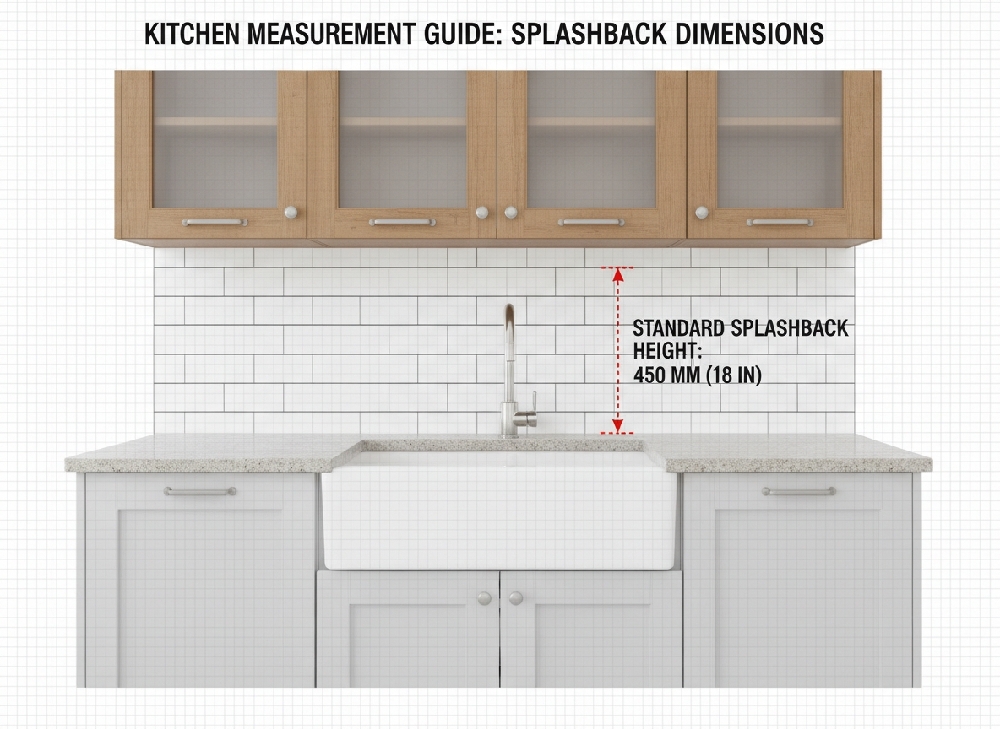
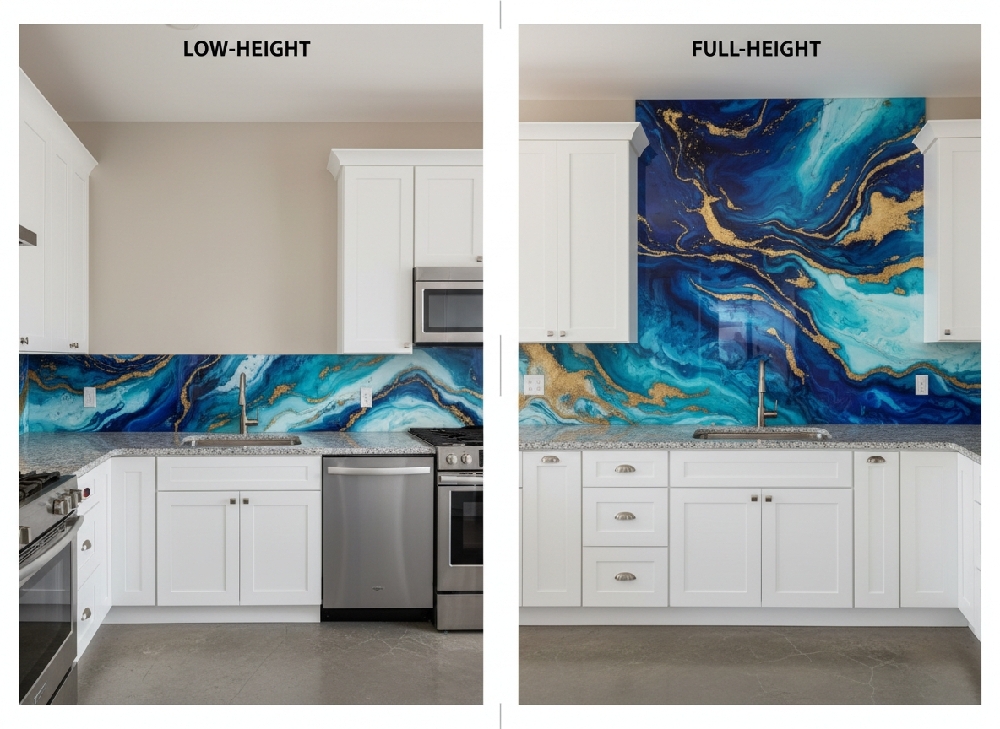
Traditionally, splashbacks extend from the top of the worktop to the underside of the wall cabinets. This typically measures 500–600mm, depending on the kitchen design.
This height provides sufficient protection from everyday splashes while maintaining a clean, balanced look. It remains the most commonly specified option in both traditional and modern kitchens.
Full-Height Splashbacks
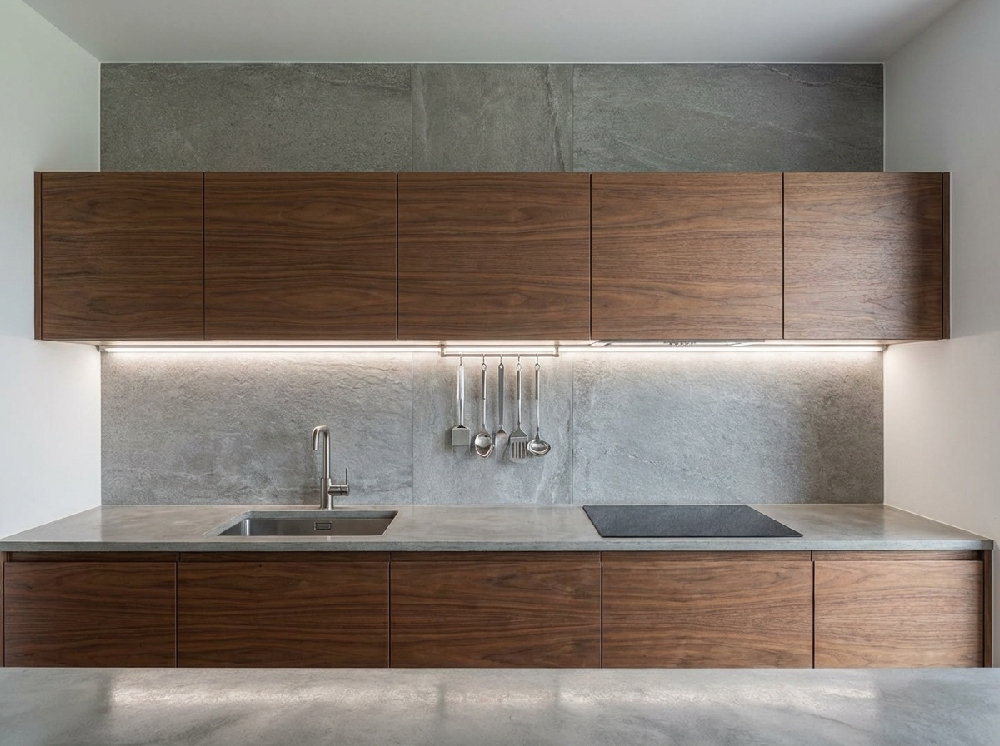
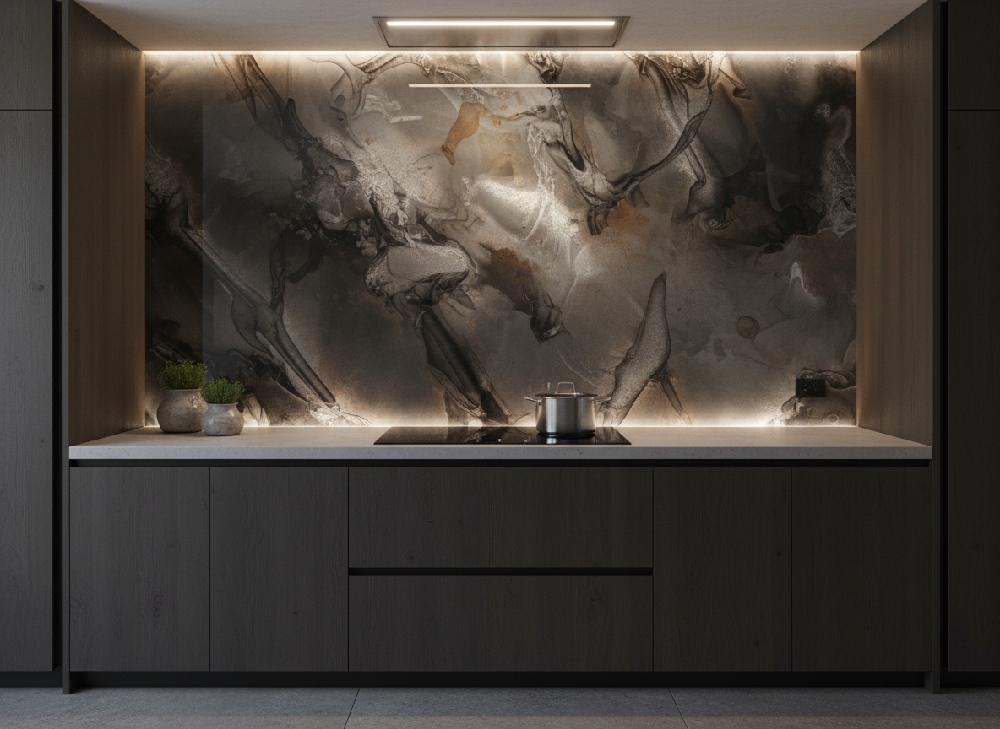
In some designs, splashbacks run from the worktop all the way to the ceiling. This approach is often chosen behind cooktops or in kitchens without wall cabinets.
Full-height splashbacks:
Offer maximum wall protection
Create a strong visual feature
Reduce the need for additional finishes
Glass splashbacks are particularly effective in full-height applications due to their seamless appearance.
Splashback Height Behind a Cooktop
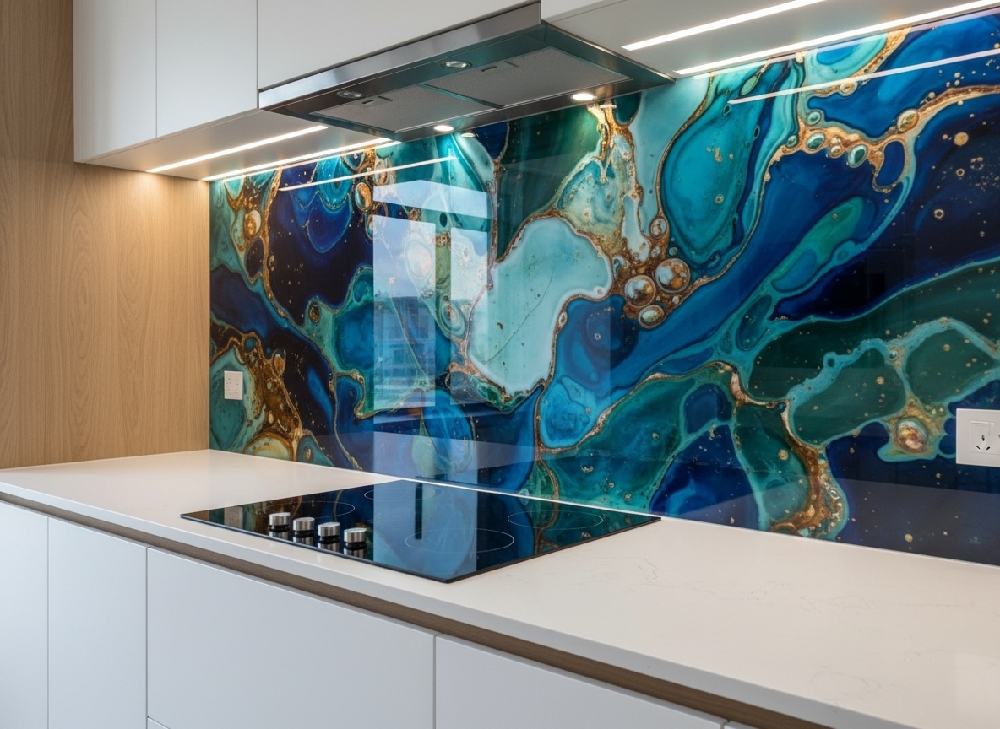
Behind a hob or cooktop, splashback height is more than a design choice—it’s a performance requirement. Many homeowners choose to extend the splashback higher in this area to manage heat and grease.
Made-to-measure options from DIY Splashbacks allow you to increase height exactly where it’s needed without over-installing elsewhere.
Bathroom Splashback Height
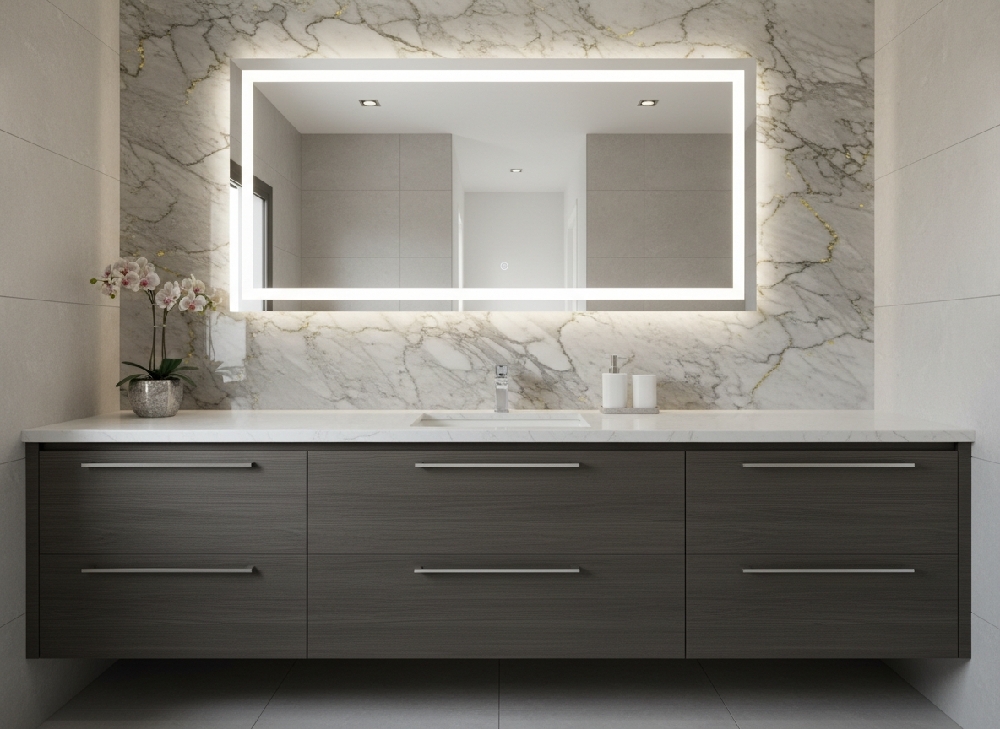
In bathrooms, splashbacks behind basins usually extend 300–400mm above the sink or up to the bottom of a mirror or cabinet. This provides effective protection while keeping the space visually light.
In high-use or commercial-style bathrooms, full-height splashbacks are also a practical choice.
Is There a Minimum or Maximum Height?
There is no strict legal minimum, but best practice is to cover any area exposed to regular water, heat, or cleaning. The maximum height is largely a design decision, as long as materials are suitable for the environment.
From a traditional standpoint, splashbacks should always be tall enough to prevent damage. Modern materials simply give you more flexibility in how that’s achieved.
In Summary
The ideal splashback height depends on how and where it’s used. Standard heights work well for most kitchens, while full-height options offer added protection and visual impact in key areas.
By choosing the right height—and specifying it accurately—you ensure your splashback performs properly and complements the overall design of your space.